
No products in the cart.
Last updated: July 1, 2026
Quick Answer
Peptides are short chains of amino acids linked by peptide bonds, typically containing 2 to 50 amino acid residues. They serve as crucial biological messengers, hormones, and signaling molecules in the body, bridging the gap between individual amino acids and full proteins. Understanding what peptides are, their structure, synthesis, and function is essential for grasping modern biochemistry, drug development, and therapeutic applications.
Key Takeaways
- Peptides are chains of 2 to 50 amino acids connected by peptide bonds formed through condensation reactions
- The primary structure (amino acid sequence) determines all higher-level peptide properties and functions
- Cells synthesize peptides through ribosomal translation or non-ribosomal pathways depending on the peptide type
- Peptides function as hormones, neurotransmitters, antimicrobial agents, and cell signaling molecules
- Synthetic peptide production uses solid-phase peptide synthesis (SPPS) for research and pharmaceutical applications
- Peptide bonds form between the carboxyl group of one amino acid and the amino group of another
- Different peptide categories include dipeptides, oligopeptides, and polypeptides based on chain length
- Therapeutic peptides represent a growing pharmaceutical sector with applications in diabetes, cancer, and infectious diseases
What Are Peptides and How Do They Differ from Proteins?
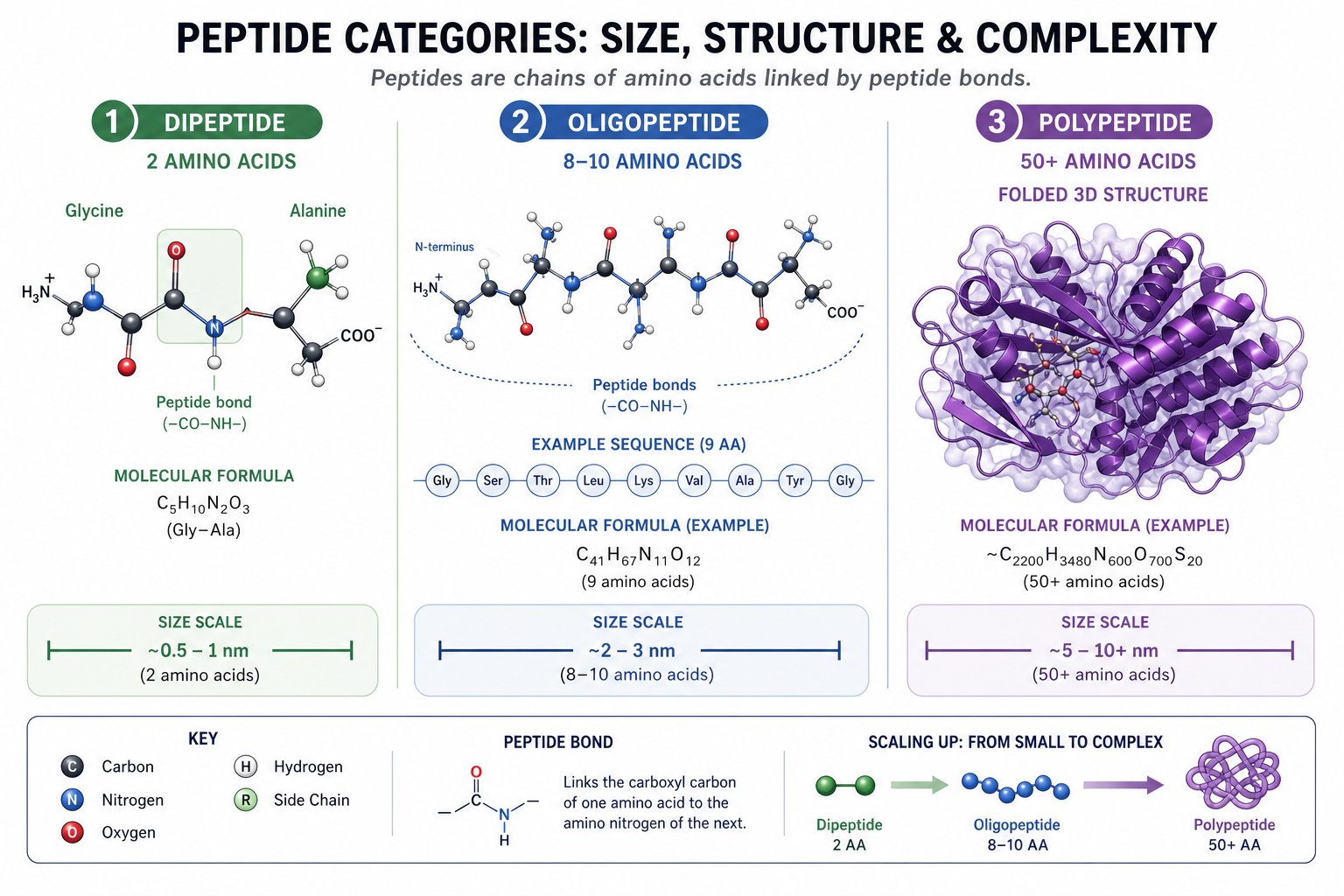
Peptides are molecules composed of amino acids linked together by peptide bonds, containing between 2 and approximately 50 amino acid residues. They occupy the molecular space between individual amino acids and full proteins, which typically contain more than 50 amino acids.
The distinction between peptides and proteins is not absolute but generally follows these guidelines:
- Dipeptides: 2 amino acids
- Tripeptides: 3 amino acids
- Oligopeptides: 4 to 20 amino acids
- Polypeptides: 20 to 50 amino acids
- Proteins: More than 50 amino acids
Peptides typically have simpler structures than proteins and may not fold into complex three-dimensional shapes. Proteins often contain multiple polypeptide chains and exhibit quaternary structure, while most peptides remain relatively linear or form simple loops.
Key functional differences: Peptides usually act as signaling molecules, hormones, or short-term messengers. Proteins perform structural roles, catalyze reactions as enzymes, and carry out complex cellular functions requiring stable, intricate architectures.
What Is the Structure of Peptides?
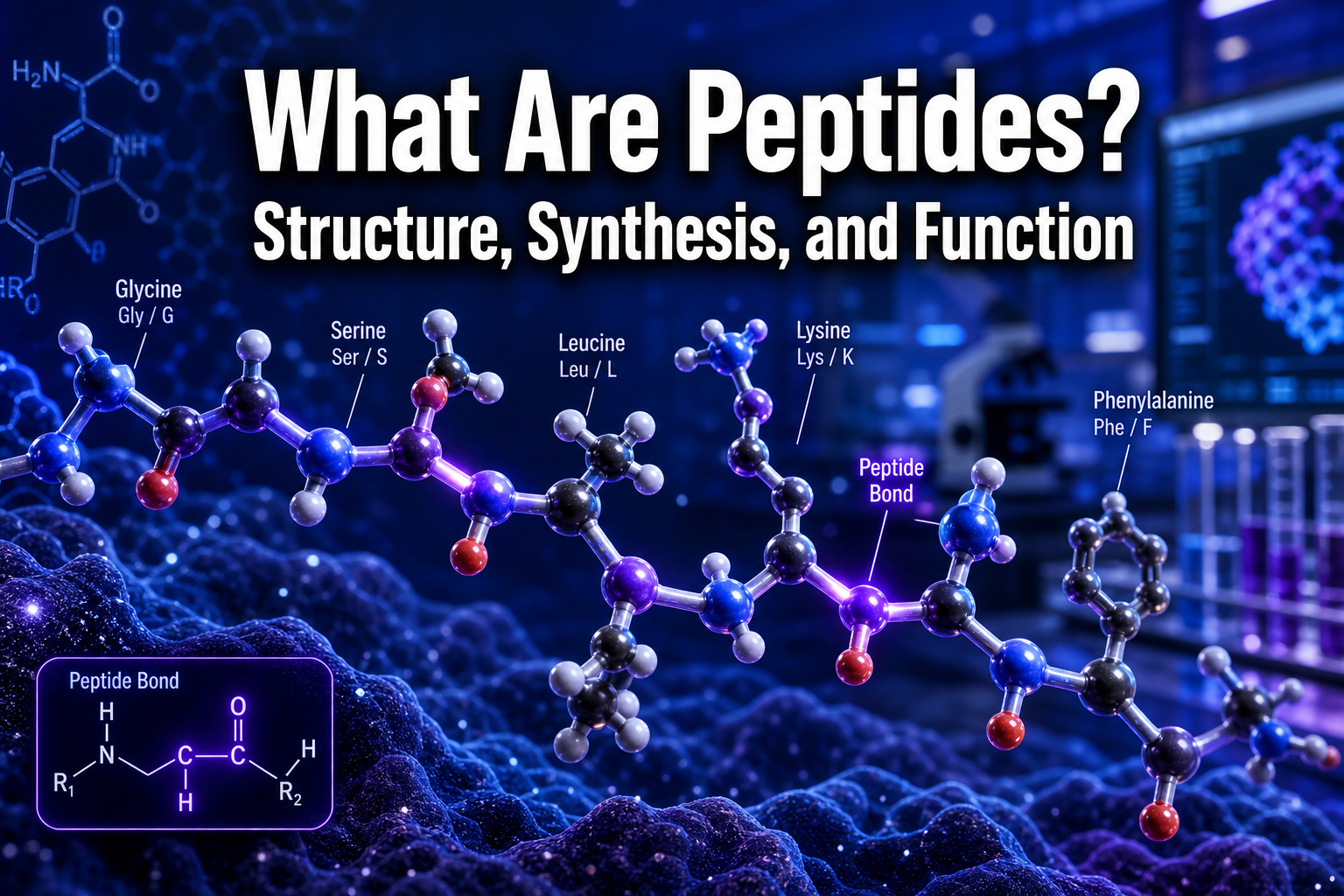
Peptide structure exists at multiple organizational levels, though simpler than protein structure. The primary structure is the linear sequence of amino acids, which determines all subsequent properties.
Primary Structure
The primary structure represents the specific order of amino acids in the peptide chain. Each amino acid connects to the next through a peptide bond, creating a backbone with a repeating pattern of nitrogen-carbon-carbon atoms. Side chains (R groups) extend from this backbone, giving each peptide unique chemical properties.
Secondary and Tertiary Structure
Longer peptides may form secondary structures including:
- Alpha helices: Spiral conformations stabilized by hydrogen bonds
- Beta sheets: Extended strands lying side-by-side
- Turns and loops: Connecting regions between structured segments
Tertiary structure refers to the overall three-dimensional shape formed by the entire peptide chain. Short peptides often lack stable tertiary structure in solution, remaining flexible until they bind to receptors or other molecules.
Common mistake: Assuming all peptides have rigid structures. Many bioactive peptides are intrinsically disordered in solution and only adopt specific conformations when binding to their targets.
How Are Peptide Bonds Formed?
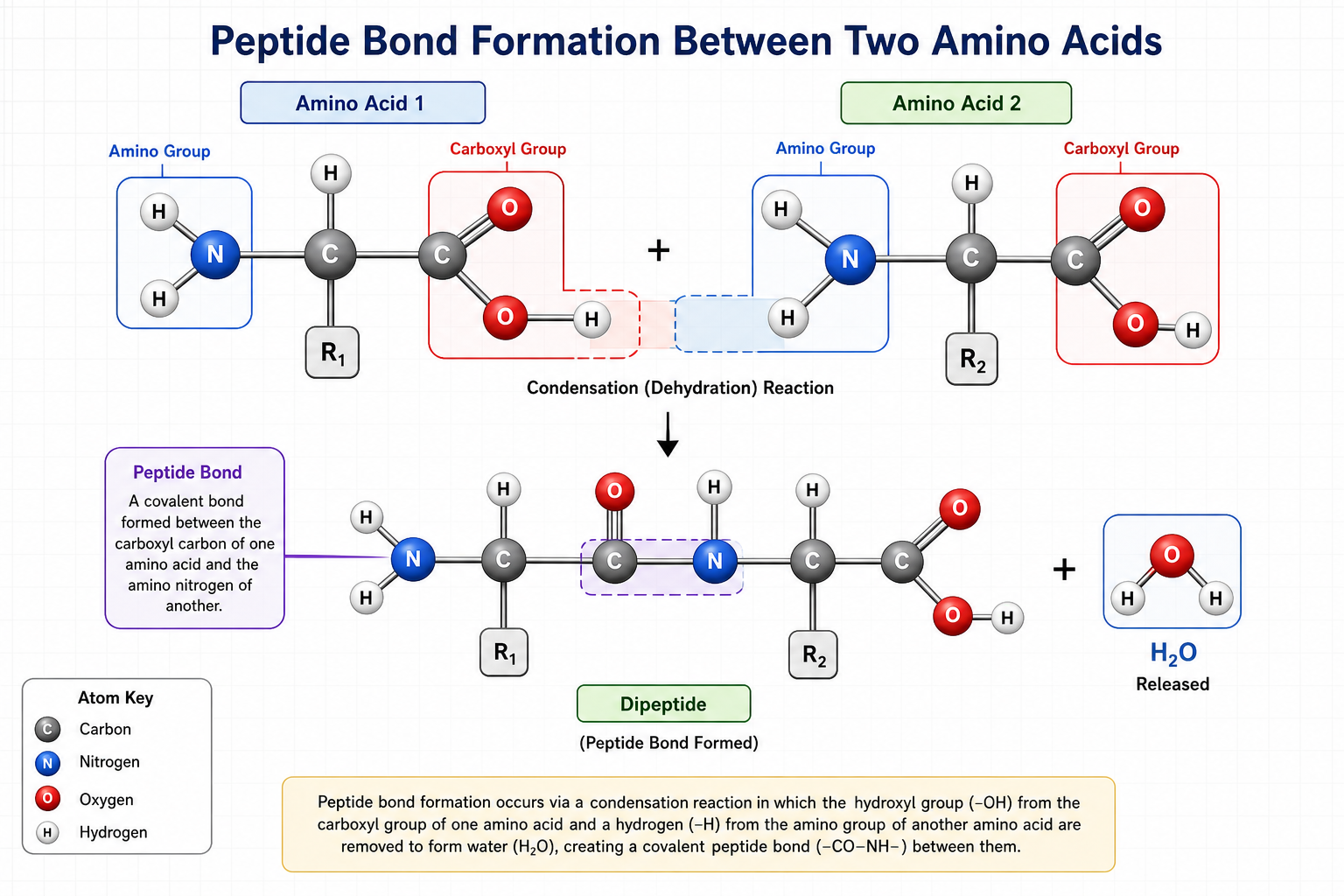
Peptide bonds form through a condensation reaction (also called dehydration synthesis) between two amino acids. The carboxyl group (-COOH) of one amino acid reacts with the amino group (-NH2) of another, releasing a water molecule and creating a covalent bond.
The resulting peptide bond has these characteristics:
- Planar geometry: The C-N bond has partial double-bond character due to resonance
- Trans configuration: The alpha carbons of adjacent amino acids typically sit on opposite sides of the peptide bond
- Rigid structure: Limited rotation around the peptide bond restricts conformational flexibility
- Stability: Peptide bonds are relatively stable under physiological conditions but can be cleaved by specific enzymes called peptidases
The reaction can be represented as:
Amino Acid 1 + Amino Acid 2 → Dipeptide + H2O
In biological systems, this reaction requires energy input and enzymatic catalysis. The ribosome catalyzes peptide bond formation during protein synthesis, using aminoacyl-tRNA molecules as substrates.
What Are the Different Types of Peptide Synthesis?
Peptides are synthesized through two main pathways: biological synthesis within living cells and chemical synthesis in laboratories.
Ribosomal Synthesis
Most peptides in nature are produced through ribosomal translation, the same process that creates proteins. This pathway:
- Reads messenger RNA (mRNA) sequences
- Uses transfer RNA (tRNA) to deliver amino acids
- Forms peptide bonds in the ribosome
- Produces peptides from the 20 standard amino acids
- Allows post-translational modifications after initial synthesis
Examples include insulin, glucagon, and many neuropeptides.
Non-Ribosomal Synthesis
Some organisms produce peptides through non-ribosomal peptide synthetases (NRPS), large enzyme complexes that:
- Operate independently of ribosomes and mRNA
- Can incorporate non-standard amino acids
- Create cyclic peptides and other unusual structures
- Produce many antibiotics and toxins
Bacteria and fungi commonly use this pathway to create antimicrobial peptides like penicillin and cyclosporine.
Chemical Synthesis
Laboratory peptide synthesis primarily uses solid-phase peptide synthesis (SPPS), developed by Bruce Merrifield in the 1960s. This method:
- Attaches the first amino acid to a solid resin bead
- Adds amino acids sequentially from C-terminus to N-terminus
- Uses protecting groups to prevent unwanted reactions
- Employs coupling reagents to activate carboxyl groups
- Cleaves the completed peptide from the resin
- Purifies the product using chromatography
Choose SPPS if: You need custom peptides for research, require non-natural amino acids, or want precise control over sequence and modifications. This method works well for peptides up to about 50 amino acids but becomes challenging for longer sequences.
What Functions Do Peptides Perform in the Body?
Peptides serve diverse biological functions, acting as chemical messengers and regulatory molecules throughout the body.
Hormonal Functions
Many peptides function as hormones, traveling through the bloodstream to affect distant target cells:
- Insulin: Regulates glucose metabolism (51 amino acids)
- Glucagon: Raises blood glucose levels (29 amino acids)
- Oxytocin: Influences social bonding and childbirth (9 amino acids)
- Vasopressin: Controls water retention and blood pressure (9 amino acids)
Neurotransmission
Neuropeptides modulate neural signaling in the brain and nervous system:
- Endorphins: Natural pain relievers
- Substance P: Transmits pain signals
- Neuropeptide Y: Regulates appetite and stress response
Antimicrobial Defense
Antimicrobial peptides (AMPs) form part of the innate immune system:
- Disrupt bacterial cell membranes
- Provide broad-spectrum antimicrobial activity
- Include defensins and cathelicidins in humans
- Represent potential alternatives to conventional antibiotics
Cell Signaling
Many peptides regulate cellular processes through receptor binding:
- Growth factors stimulate cell division and differentiation
- Cytokines coordinate immune responses
- Chemokines direct cell migration
Edge case: Some peptides have multiple functions depending on location and concentration. Substance P acts as both a neurotransmitter in pain pathways and an immune modulator in inflammatory responses.
How Are Peptides Used in Medicine and Therapeutics?
Therapeutic peptides represent a rapidly growing pharmaceutical sector, with over 80 peptide drugs approved for clinical use as of 2026 and hundreds more in development.
Current Therapeutic Applications
Diabetes management: Insulin and GLP-1 receptor agonists (like semaglutide) help control blood sugar levels.
Cancer treatment: Peptide-drug conjugates deliver chemotherapy specifically to tumor cells, reducing side effects.
Infectious diseases: Antimicrobial peptides offer alternatives to traditional antibiotics, particularly against resistant bacteria.
Cardiovascular conditions: Peptides like natriuretic peptides treat heart failure and hypertension.
Advantages of Peptide Therapeutics
- High specificity for target receptors
- Predictable metabolism and clearance
- Lower risk of drug-drug interactions
- Reduced accumulation in tissues compared to small molecules
Challenges and Limitations
Peptide drugs face several obstacles:
- Poor oral bioavailability: Digestive enzymes break down most peptides
- Short half-life: Rapid kidney clearance requires frequent dosing
- High production costs: Complex synthesis and purification
- Stability issues: Degradation during storage
Researchers address these challenges through chemical modifications, including:
- Cyclization to increase stability
- Addition of non-natural amino acids
- PEGylation (attaching polyethylene glycol chains)
- Development of peptide mimetics with improved properties
What Determines Peptide Stability and Degradation?
Peptide stability depends on chemical structure, environmental conditions, and biological factors. Understanding degradation pathways is crucial for both endogenous peptide function and therapeutic development.
Chemical Degradation Pathways
Hydrolysis: Water molecules break peptide bonds, especially at elevated temperatures or extreme pH values.
Oxidation: Amino acids containing sulfur (cysteine, methionine) or aromatic rings (tryptophan, tyrosine) are susceptible to oxidative damage.
Deamidation: Asparagine and glutamine residues can lose their amide groups, altering peptide charge and function.
Disulfide bond scrambling: Incorrect pairing of cysteine residues creates inactive peptide variants.
Enzymatic Degradation
Peptidases (proteolytic enzymes) cleave peptide bonds at specific sites:
- Exopeptidases: Remove amino acids from chain ends
- Endopeptidases: Cut internal peptide bonds
- Specific proteases: Recognize particular amino acid sequences
The body uses enzymatic degradation to regulate peptide hormone levels and recycle amino acids.
Factors Affecting Stability
Choose storage and formulation conditions based on these factors:
- Temperature: Lower temperatures slow degradation; most peptides require refrigeration
- pH: Neutral pH (6-8) generally provides optimal stability
- Concentration: Dilute solutions may promote aggregation in some peptides
- Excipients: Buffers, antioxidants, and stabilizers extend shelf life
How Do Scientists Study and Analyze Peptides?
Modern peptide research employs multiple analytical techniques to characterize structure, purity, and function.
Mass Spectrometry
Mass spectrometry (MS) determines peptide molecular weight and sequence:
- Identifies amino acid composition
- Detects post-translational modifications
- Quantifies peptide abundance in biological samples
- Confirms synthesis success and purity
MALDI-TOF MS and ESI-MS are the most common ionization methods for peptide analysis.
Chromatography
Separation techniques isolate and purify peptides:
- HPLC (High-Performance Liquid Chromatography): Separates peptides based on hydrophobicity
- Ion exchange chromatography: Separates by charge
- Size exclusion chromatography: Separates by molecular size
Structural Analysis
NMR spectroscopy (Nuclear Magnetic Resonance) reveals three-dimensional structure in solution, showing how peptides fold and interact with other molecules.
X-ray crystallography provides atomic-resolution structures of crystallized peptides, though many short peptides resist crystallization.
Circular dichroism (CD) spectroscopy quickly assesses secondary structure content, distinguishing alpha helices from beta sheets.
Functional Assays
Researchers test peptide biological activity through:
- Receptor binding assays measuring affinity for target proteins
- Cell-based assays evaluating physiological responses
- Animal models testing in vivo efficacy and safety
- Antimicrobial assays determining pathogen inhibition
What Are Emerging Trends in Peptide Research?
Peptide science continues advancing rapidly, with several promising directions shaping future applications.
Peptide Drug Discovery
Computational methods now predict peptide structures and optimize sequences before synthesis. Machine learning algorithms screen vast libraries of potential peptide therapeutics, identifying candidates with desired properties.
Stapled peptides use chemical crosslinks to stabilize alpha-helical structures, improving cell penetration and resistance to degradation. These modified peptides can target protein-protein interactions previously considered “undruggable.”
Bioactive Peptides from Food
Research into food-derived peptides reveals health benefits beyond basic nutrition:
- Milk proteins yield peptides with antihypertensive effects
- Soy peptides may reduce cholesterol
- Marine-derived peptides show antioxidant properties
These discoveries drive development of functional foods and nutraceuticals.
Peptide-Based Biomaterials
Self-assembling peptides create nanostructures for:
- Tissue engineering scaffolds
- Drug delivery vehicles
- Wound healing materials
- Biosensors and diagnostics
Short peptide sequences can form hydrogels, nanofibers, and other organized structures through controlled molecular interactions.
Personalized Peptide Therapies
Advances in genomics and proteomics enable design of patient-specific peptide treatments:
- Cancer vaccines using tumor-specific peptide antigens
- Personalized antimicrobial peptides based on pathogen resistance profiles
- Custom peptides targeting individual genetic variants
Frequently Asked Questions
What is the smallest peptide?
The smallest peptide is a dipeptide, containing just two amino acids linked by one peptide bond. Examples include carnosine (beta-alanine and histidine) found in muscle tissue.
Can peptides be taken orally as supplements?
Most peptides are broken down by digestive enzymes when taken orally, limiting absorption. Some small peptides may survive digestion partially intact, but bioavailability is generally low compared to injection or other delivery methods.
How long do peptides last in the body?
Peptide half-lives vary widely, from minutes to hours. Small peptides are typically cleared rapidly by kidneys or degraded by enzymes. Insulin has a half-life of about 4-6 minutes, while modified therapeutic peptides may last several hours or days.
Are peptides the same as amino acids?
No. Amino acids are individual molecules that serve as building blocks. Peptides are chains of two or more amino acids connected by peptide bonds. A single amino acid is not a peptide.
What is the difference between a peptide and a polypeptide?
The terms overlap, but peptide generally refers to shorter chains (2-50 amino acids), while polypeptide often describes longer chains (20-50+ amino acids) that may fold into protein-like structures.
Can the body make its own peptides?
Yes. Cells continuously synthesize peptides through ribosomal translation and enzymatic processing of larger proteins. The body produces thousands of different peptides naturally for various physiological functions.
Why are peptides used in skincare products?
Skincare peptides are marketed to stimulate collagen production, reduce wrinkles, and improve skin appearance. However, most peptides cannot penetrate intact skin effectively, and scientific evidence for topical peptide benefits remains limited.
How are peptides different from steroids?
Peptides are chains of amino acids, while steroids are lipid molecules with a characteristic four-ring structure. They have completely different chemical compositions, synthesis pathways, and mechanisms of action.
What makes a peptide bioactive?
A bioactive peptide produces a physiological effect when it binds to specific receptors or interacts with biological molecules. The amino acid sequence determines binding specificity and biological activity.
Are peptide supplements safe?
Safety depends on the specific peptide, dose, purity, and individual health status. Many peptides sold as supplements lack rigorous safety testing. Consult healthcare providers before using peptide supplements, especially if you have medical conditions.
How much do synthetic peptides cost?
Costs vary widely based on length, purity, modifications, and quantity. Research-grade peptides may cost $100-500 for small amounts, while therapeutic peptides for clinical use are significantly more expensive due to manufacturing standards.
Can peptides help with muscle growth?
Some peptides influence growth hormone release or muscle protein synthesis. However, many peptides marketed for muscle building lack robust clinical evidence, and some are banned in competitive sports.
Conclusion
Understanding what peptides are, their structure, synthesis, and function reveals their central role in biology and medicine. These versatile molecules, composed of amino acid chains connected by peptide bonds, serve as hormones, neurotransmitters, antimicrobial agents, and cellular messengers. Their structures range from simple linear chains to complex folded conformations, with the amino acid sequence determining all functional properties.
Peptides are synthesized through both biological pathways in living cells and chemical methods in laboratories, each approach offering distinct advantages. Ribosomal synthesis produces most natural peptides, while solid-phase peptide synthesis enables researchers to create custom sequences for therapeutic and research applications.
The therapeutic potential of peptides continues expanding, with applications spanning diabetes management, cancer treatment, infectious disease control, and beyond. Despite challenges including poor oral bioavailability and rapid degradation, ongoing innovations in peptide modification and delivery systems are overcoming these limitations.
For researchers and healthcare professionals, staying current with peptide science means monitoring advances in computational design, structural analysis techniques, and emerging therapeutic applications. For those interested in peptide-based health products, critical evaluation of scientific evidence and consultation with qualified professionals remains essential.
The field of peptide research stands at an exciting juncture, where fundamental biochemical knowledge converges with cutting-edge drug development, biomaterials engineering, and personalized medicine. As analytical tools improve and our understanding deepens, peptides will undoubtedly play an increasingly important role in addressing major health challenges facing society in 2026 and beyond.
SEO Meta Title: What Are Peptides? Structure, Synthesis, and Function
Meta Description: Learn what peptides are, how they’re structured and synthesized, and their crucial biological functions in this comprehensive guide to peptide science.
Tags: peptides, amino acids, peptide bonds, protein synthesis, peptide structure, therapeutic peptides, biochemistry, molecular biology, drug development, peptide synthesis, SPPS, bioactive peptides
