
No products in the cart.
Last updated: June 26, 2026
Quick Answer
Retatrutide for research purposes can be purchased from certified research chemical suppliers, specialized peptide vendors, and licensed pharmaceutical distributors that cater to academic and clinical research institutions. Legitimate suppliers require institutional credentials, provide certificates of analysis (COA), and comply with regulatory standards for research-grade compounds. Researchers must verify supplier credentials, ensure proper documentation, and confirm the peptide meets purity standards before purchase.
Key Takeaways
- Retatrutide is available exclusively for research purposes through licensed suppliers that verify institutional credentials
- Legitimate vendors provide third-party certificates of analysis confirming purity levels typically above 98%
- Researchers must hold appropriate institutional affiliations and provide documentation before purchasing
- Prices vary significantly based on quantity, purity grade, and supplier, ranging from several hundred to thousands of dollars
- Storage requires specific conditions including refrigeration at 2-8°C for optimal stability
- Regulatory compliance differs by country, with strict controls in the United States, EU, and other jurisdictions
- Reputable suppliers offer proper documentation, transparent testing results, and responsive customer support
- Research-grade retatrutide is not approved for human consumption and is intended solely for laboratory investigation

What Is Retatrutide and Why Do Researchers Need It?
Retatrutide is a triple agonist peptide that activates GIP, GLP-1, and glucagon receptors, making it a compound of significant interest in metabolic research. Researchers study this peptide to understand its potential mechanisms in glucose regulation, weight management, and metabolic pathways.
Academic institutions, pharmaceutical companies, and clinical research organizations require access to high-purity retatrutide for various investigational purposes:
- Preclinical studies examining receptor binding and cellular responses
- Pharmacokinetic research analyzing absorption, distribution, and metabolism
- Mechanism of action studies exploring how the compound affects metabolic pathways
- Comparative analysis with other metabolic peptides and compounds
- Formulation development for potential therapeutic applications
The compound’s unique triple-agonist profile distinguishes it from single or dual-agonist peptides, making it valuable for comparative metabolic research. Researchers need verified, high-purity samples to ensure experimental validity and reproducibility.
Where to Buy Retatrutide: Certified Research Suppliers
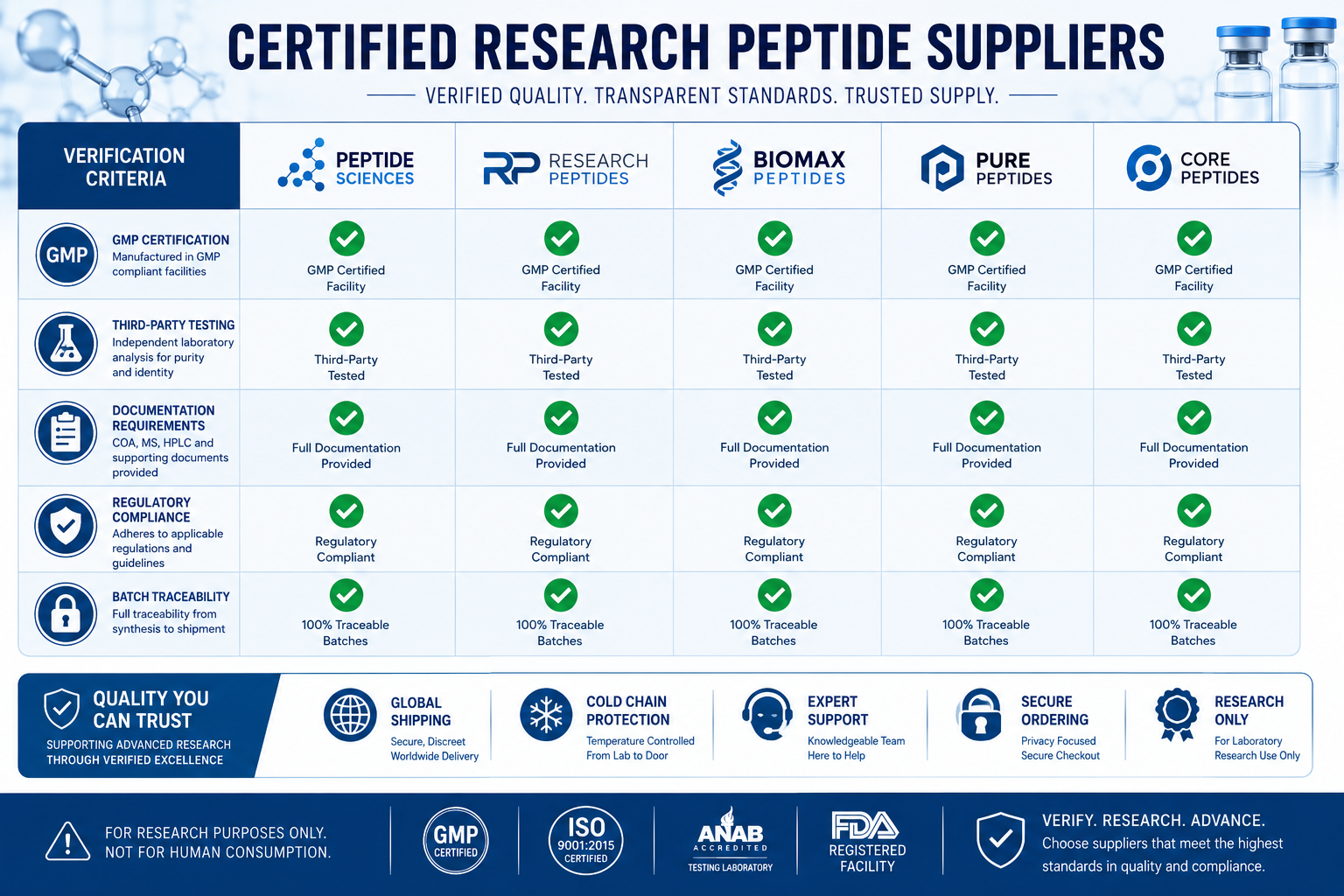
Finding legitimate sources for research-grade retatrutide requires careful vetting of suppliers who meet industry standards. Certified research chemical suppliers operate under strict quality control protocols and regulatory compliance frameworks.
Characteristics of reputable suppliers:
- Regulatory compliance: Proper licensing and adherence to local and international regulations
- Quality documentation: Certificates of analysis from accredited third-party laboratories
- Institutional verification: Requirements for proof of research affiliation before purchase
- Transparent sourcing: Clear information about synthesis methods and origin
- Professional communication: Responsive customer service with technical expertise
- Secure transactions: Encrypted payment systems and confidential handling of orders
Types of certified suppliers:
- Specialized peptide manufacturers: Companies focused exclusively on research peptides with in-house synthesis capabilities
- Research chemical distributors: Broader suppliers offering various compounds including peptides
- Pharmaceutical intermediary suppliers: Vendors serving pharmaceutical development companies
- Academic supplier networks: Organizations specifically serving university research programs
Choose suppliers with established track records, verifiable customer reviews from research institutions, and clear policies regarding product quality and returns. Avoid vendors that market compounds for human consumption or make therapeutic claims.
How to Verify Supplier Credentials and Product Quality
Verification of supplier legitimacy protects research integrity and ensures compliance with institutional requirements. Before purchasing retatrutide, researchers should conduct thorough due diligence on potential vendors.
Essential verification steps:
Check regulatory status: Confirm the supplier holds necessary licenses for distributing research chemicals in their jurisdiction. In the United States, this may include DEA registration for controlled substances and compliance with FDA regulations for research compounds.
Review certificates of analysis: Legitimate suppliers provide COAs for each batch showing:
- Purity percentage (typically 98% or higher for research-grade peptides)
- Molecular weight confirmation
- HPLC (High-Performance Liquid Chromatography) results
- Mass spectrometry data
- Endotoxin levels
- Sterility testing results when applicable
Verify third-party testing: The best suppliers use independent, accredited laboratories for testing rather than relying solely on in-house analysis. Look for COAs from recognized testing facilities.
Assess documentation requirements: Reputable vendors require institutional documentation before completing sales, including:
- Proof of institutional affiliation (university ID, research facility credentials)
- End-user certificates or declarations
- Research protocol summaries in some cases
- Principal investigator information
Common red flags to avoid:
- Suppliers marketing products for human consumption or personal use
- Absence of certificates of analysis or refusal to provide testing documentation
- Unusually low prices compared to market standards
- Poor website security or unprofessional presentation
- Lack of contact information or physical business address
- Claims about therapeutic benefits or medical applications
Understanding Retatrutide Pricing and Ordering Specifications
Research-grade retatrutide pricing varies based on multiple factors including purity grade, quantity, synthesis method, and supplier overhead. Understanding these variables helps researchers budget appropriately and identify fair market pricing.
Pricing factors:
Purity grade: Higher purity levels command premium prices. Research-grade peptides at 98%+ purity typically cost more than lower-grade alternatives. The difference between 95% and 99% purity can represent a 20-40% price increase.
Quantity: Bulk orders generally reduce per-unit costs. Common quantities range from 1mg to 100mg or more, with volume discounts applying at higher quantities.
Synthesis method: Solid-phase peptide synthesis (SPPS) quality and purification techniques affect final costs. More rigorous purification processes increase production expenses.
Packaging and storage: Lyophilized (freeze-dried) peptides in sealed vials with proper labeling and storage instructions add to costs but ensure product stability.
Typical ordering specifications:
- Minimum order quantities: Often 1-5mg for initial orders
- Standard concentrations: Usually supplied as lyophilized powder requiring reconstitution
- Purity levels: 95%, 98%, or 99%+ depending on research requirements
- Packaging: Sealed vials with inert gas atmosphere to prevent degradation
- Documentation: COA, handling instructions, and safety data sheets (SDS)
Payment and shipping considerations:
Most suppliers accept institutional purchase orders, wire transfers, or credit cards. Shipping requires temperature-controlled conditions, often with cold packs or dry ice for stability. Expect additional costs for expedited or temperature-controlled shipping, which can add 50-200 dollars to orders depending on destination and urgency.
Regulatory Compliance When Purchasing Research Peptides
Regulatory frameworks governing research peptide purchases vary by jurisdiction but share common principles regarding proper use, documentation, and institutional oversight. Researchers must understand applicable regulations to ensure compliant procurement.
United States regulations:
Research peptides fall under FDA oversight as investigational compounds. While not scheduled controlled substances, they require proper handling under institutional review board (IRB) protocols when used in studies involving human subjects. The Federal Food, Drug, and Cosmetic Act governs their distribution and use.
Key compliance requirements:
- Purchases must be for legitimate research purposes only
- Institutional affiliation and documentation required
- Proper storage and handling protocols must be followed
- Record-keeping for chain of custody and usage
- Compliance with institutional biosafety and chemical safety policies
European Union regulations:
The EU regulates research chemicals under various directives including REACH (Registration, Evaluation, Authorization, and Restriction of Chemicals). Individual member states may impose additional requirements.
International considerations:
Importing research peptides across borders requires:
- Import permits from destination country authorities
- Proper customs declarations
- Compliance with both exporting and importing country regulations
- Documentation of research purpose and institutional affiliation
- Potential inspection by customs or regulatory agencies
Institutional requirements:
Beyond governmental regulations, research institutions typically require:
- Approval from institutional chemical safety committees
- Documentation in laboratory chemical inventories
- Compliance with institutional biosafety protocols
- Proper waste disposal procedures
- Training for personnel handling research compounds
Researchers should consult with their institutional compliance offices before ordering to ensure all requirements are met. Violations can result in loss of research privileges, institutional sanctions, or legal consequences.
Proper Storage and Handling of Research-Grade Retatrutide
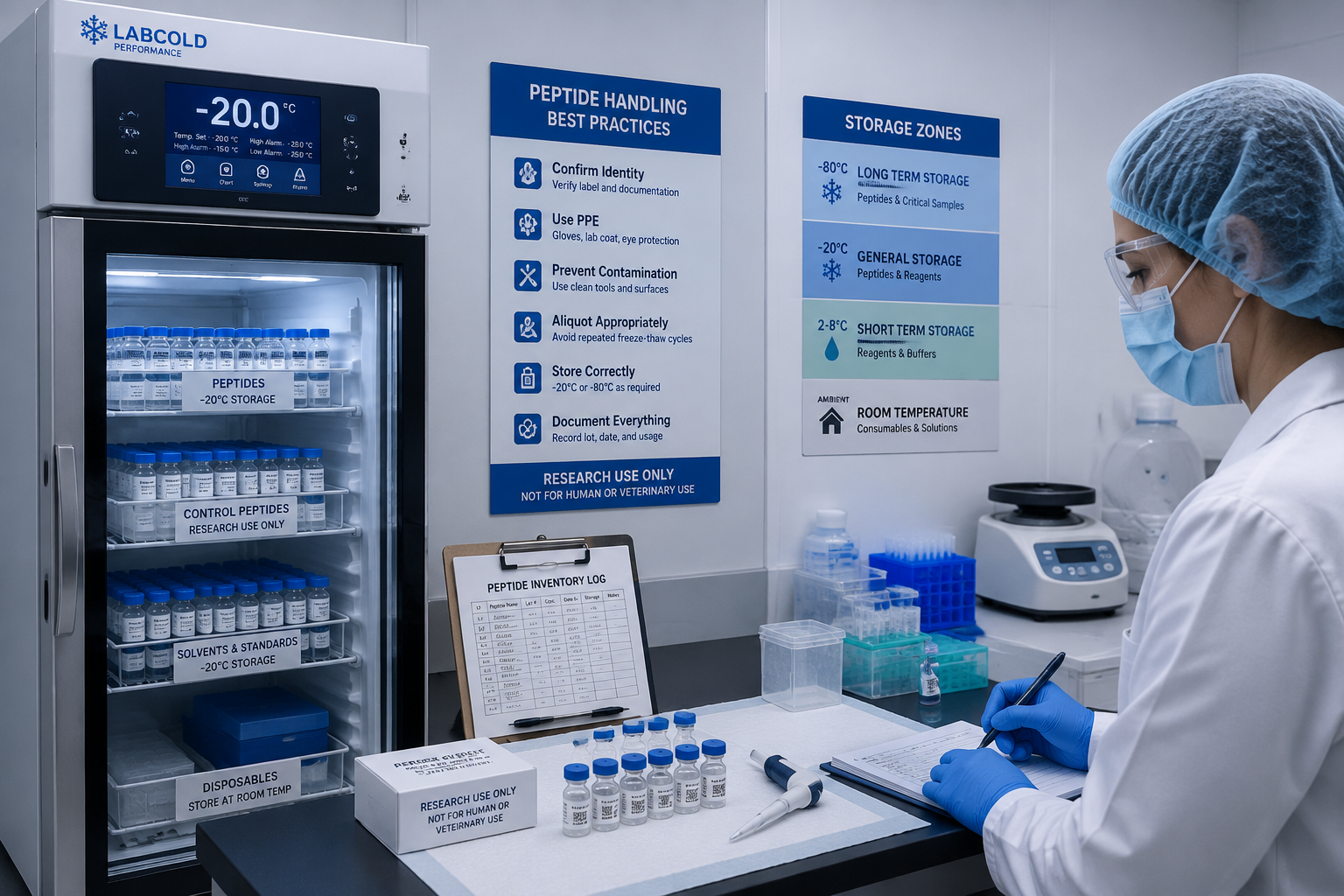
Maintaining peptide integrity from receipt through experimental use requires adherence to specific storage and handling protocols. Improper storage can degrade retatrutide, compromising research results and wasting valuable resources.
Storage requirements:
Lyophilized (powder) form:
- Store at -20°C to -80°C for long-term stability
- Keep in original sealed vials with desiccant
- Protect from light exposure using amber vials or foil wrapping
- Minimize freeze-thaw cycles which can degrade peptide structure
- Shelf life typically 1-2 years when properly stored
Reconstituted (solution) form:
- Store at 2-8°C (refrigerated) for short-term use (up to 2 weeks)
- For longer storage, aliquot into single-use portions and freeze at -20°C or below
- Avoid repeated freeze-thaw cycles
- Use sterile bacteriostatic water or appropriate buffer for reconstitution
- Label clearly with reconstitution date and concentration
Handling best practices:
- Work in appropriate environment: Use biosafety cabinet or clean bench when handling
- Wear protective equipment: Gloves, lab coat, and safety glasses minimum
- Use sterile technique: Prevent contamination during reconstitution and aliquoting
- Document everything: Record receipt date, storage location, reconstitution details, and usage
- Minimize exposure: Limit time at room temperature during handling
- Proper disposal: Follow institutional protocols for chemical waste disposal
Common mistakes to avoid:
- Storing reconstituted peptide at room temperature
- Using non-sterile water for reconstitution
- Exposing peptide to direct sunlight or heat sources
- Failing to equilibrate frozen samples to room temperature before opening (causes condensation)
- Reusing aliquots that have been thawed multiple times
Alternatives and Complementary Research Compounds
Researchers studying metabolic pathways may consider related compounds alongside or instead of retatrutide depending on specific research objectives. Understanding the landscape of similar peptides helps inform purchasing decisions.
Related research peptides:
Tirzepatide: A dual GIP/GLP-1 receptor agonist, more readily available than retatrutide and useful for comparative studies examining the contribution of glucagon receptor activation.
Semaglutide: A selective GLP-1 receptor agonist, widely studied and available, serving as a reference compound for single-agonist comparisons.
Liraglutide: Another GLP-1 agonist with extensive research history, useful for mechanism comparison studies.
Comparison considerations:
| Compound | Receptor Targets | Research Availability | Typical Use Cases |
|---|---|---|---|
| Retatrutide | GIP/GLP-1/Glucagon | Limited, specialized suppliers | Triple-agonist mechanism studies |
| Tirzepatide | GIP/GLP-1 | Moderate availability | Dual-agonist comparisons |
| Semaglutide | GLP-1 | Widely available | Single-agonist reference studies |
| Liraglutide | GLP-1 | Widely available | Established mechanism research |
When to choose alternatives:
- Budget constraints favor more readily available compounds
- Research questions focus on specific receptor pathways rather than triple-agonist effects
- Preliminary studies before investing in more expensive compounds
- Comparative analysis requires multiple compounds with different receptor profiles
Complementary compounds for metabolic research:
Researchers often combine peptide studies with other metabolic modulators including insulin analogs, AMPK activators, or other metabolic pathway modulators to understand broader mechanisms.
Common Questions About Purchasing Research Retatrutide
Can individuals purchase retatrutide for personal research?
No. Legitimate suppliers require institutional affiliation and will not sell to individuals for personal use. Research peptides must be purchased through recognized research institutions, universities, or licensed pharmaceutical companies with proper credentials and oversight.
How long does shipping typically take?
Domestic shipping within the same country usually takes 2-5 business days with standard delivery, or 1-2 days with expedited shipping. International orders may require 1-3 weeks depending on customs processing and regulatory clearances. Temperature-controlled shipping is standard for peptides.
What purity level is necessary for research?
Most research applications require 98% or higher purity. Lower purity grades (95-97%) may suffice for preliminary screening studies, while critical mechanistic studies or in vivo work typically demands 99%+ purity to minimize confounding effects from impurities.
Do suppliers offer custom synthesis or modifications?
Many specialized peptide suppliers offer custom synthesis services for modified versions or specific formulations. This typically requires minimum order quantities and longer lead times (4-12 weeks) compared to standard catalog products.
What documentation should I receive with my order?
Expect a certificate of analysis (COA) with purity data, HPLC chromatogram, mass spectrometry results, and handling instructions. Safety data sheets (SDS) should also be included. Retain all documentation for institutional compliance and research records.
Can retatrutide be returned if it doesn’t meet specifications?
Reputable suppliers offer returns or replacements if products fail to meet stated specifications as documented in the COA. However, returns are typically not accepted for buyer’s remorse or change in research direction due to the specialized nature of these compounds.
How do I know if a supplier is legitimate?
Check for business registration, physical address, professional website with technical information, requirement for institutional credentials, provision of COAs, and verifiable customer reviews from research institutions. Contact their customer service with technical questions to assess expertise.
What are the legal risks of purchasing research peptides?
When purchased through legitimate channels for bona fide research purposes with proper institutional oversight, legal risks are minimal. Risks increase significantly when purchasing from unverified sources, for personal use, or without proper documentation and institutional approval.
How should I prepare for my first order?
Gather institutional documentation (affiliation proof, principal investigator information), confirm your institution’s procurement procedures, verify storage capabilities in your laboratory, review handling protocols, and prepare necessary documentation for your institution’s chemical inventory system.
Are there minimum qualifications for purchasing?
Most suppliers require proof of affiliation with a recognized research institution, university, or pharmaceutical company. Individual researchers typically need to demonstrate they work under appropriate supervision with institutional approval for their research protocols.
What happens if the peptide degrades during shipping?
Quality suppliers use appropriate packaging with temperature monitoring. If degradation occurs due to shipping issues, contact the supplier immediately with documentation. Most will replace products damaged during transit at no additional cost.
Can I purchase retatrutide from international suppliers?
Yes, but this requires additional documentation including import permits, customs declarations, and compliance with both exporting and importing country regulations. Consult your institutional compliance office before ordering internationally to ensure all requirements are met.
Conclusion
Purchasing retatrutide for research requires careful attention to supplier credentials, regulatory compliance, and proper handling protocols. Researchers should prioritize certified suppliers who provide comprehensive documentation, require institutional verification, and maintain transparent quality standards. The investment in high-purity, properly documented research peptides protects experimental integrity and ensures compliance with institutional and regulatory requirements.
Before making a purchase, verify supplier legitimacy through multiple channels, confirm your institution’s procurement requirements, and ensure proper storage capabilities are in place. Work closely with institutional compliance offices to navigate regulatory requirements, particularly for international orders. Document all aspects of procurement, storage, and usage to maintain proper chain of custody and support research reproducibility.
The landscape of research peptide suppliers continues to evolve in 2026, with increasing emphasis on quality assurance and regulatory compliance. Researchers who establish relationships with reputable suppliers, maintain meticulous documentation, and follow proper handling protocols position themselves for successful research outcomes while minimizing compliance risks.
SEO Meta Title: Where to Buy Retatrutide for Research: 2026 Guide
Meta Description: Find certified suppliers for research-grade retatrutide. Learn verification steps, pricing factors, regulatory compliance, and proper handling protocols.
Tags: retatrutide, research peptides, peptide suppliers, metabolic research, GLP-1 agonist, research chemicals, laboratory supplies, pharmaceutical research, peptide synthesis, research compliance, scientific suppliers, peptide quality
