
No products in the cart.
The global peptide therapeutics market reached $48.5 billion in 2025, yet researchers continue to struggle with a fundamental challenge: identifying reliable sources for high-quality research peptides. With countless vendors claiming pharmaceutical-grade products and the proliferation of unverified suppliers, knowing where to buy research peptides has become as critical as the research itself.
Research peptides serve as essential tools in scientific investigations spanning cellular biology, pharmacology, and therapeutic development. However, the quality of research outcomes depends entirely on the purity and authenticity of these compounds. A single contaminated or mislabeled peptide can invalidate months of work and waste significant research funding.
This guide provides researchers with evidence-based criteria for evaluating suppliers, understanding regulatory considerations, and making informed purchasing decisions in 2026.
Key Takeaways
- Legitimate research peptide suppliers provide third-party testing certificates showing purity levels of 98% or higher with detailed analytical data
- Regulatory compliance varies by jurisdiction, with research peptides classified differently from pharmaceutical drugs but still subject to quality standards
- Price alone is a poor indicator of quality; reputable suppliers balance competitive pricing with rigorous quality control processes
- Proper storage and handling requirements begin at the supplier level, with temperature-controlled shipping being a minimum standard
- Verification of supplier credentials, including business registration, laboratory certifications, and customer reviews, is essential before making purchases
Understanding Research Peptides and Their Applications
Research peptides are short chains of amino acids used exclusively for scientific investigation and laboratory research. These compounds play crucial roles in studying cellular mechanisms, protein interactions, receptor binding, and potential therapeutic pathways. Unlike pharmaceutical peptides approved for human use, research peptides are designated “for research purposes only” and are not intended for human consumption.
The distinction matters significantly when considering where to buy research peptides. Legitimate suppliers clearly label their products for research use and maintain strict quality standards comparable to pharmaceutical-grade compounds, even though the end application differs.
Common research applications include:
- Cellular signaling pathway studies
- Receptor binding affinity research
- Protein-protein interaction investigations
- Metabolic pathway analysis
- Tissue regeneration studies
- Neuropeptide function research
Critical Quality Indicators When Evaluating Suppliers
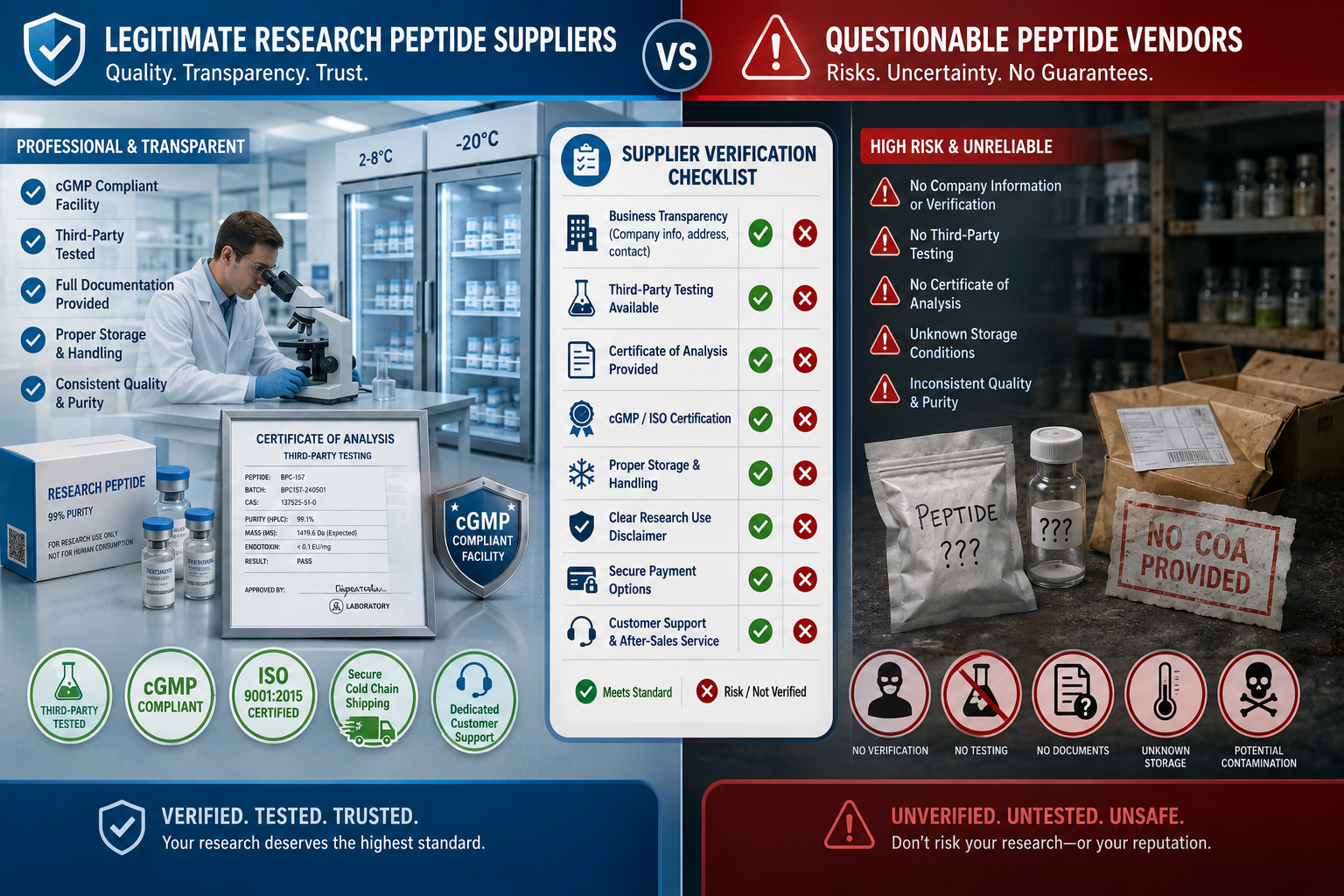
Quality assurance separates reputable research peptide suppliers from questionable vendors. Researchers should prioritize several non-negotiable quality indicators before making purchasing decisions.
Third-Party Testing and Certificates of Analysis
Every legitimate supplier provides Certificates of Analysis (CoA) from independent laboratories. These documents should include:
- High-Performance Liquid Chromatography (HPLC) results showing purity percentages
- Mass Spectrometry (MS) data confirming molecular weight and identity
- Amino acid analysis verifying sequence accuracy
- Endotoxin testing results for biological safety
- Batch numbers linking certificates to specific products
Purity levels should consistently exceed 98% for most research applications. Suppliers who refuse to provide CoAs or offer only generic certificates should be avoided entirely.
Manufacturing Standards and Facilities
Reputable suppliers manufacture or source peptides from facilities following Good Manufacturing Practices (GMP). While research peptides don’t require the same regulatory approval as pharmaceuticals, quality-focused suppliers voluntarily adopt these standards.
Key facility indicators include:
- ISO certification (ISO 9001 or higher)
- Clean room manufacturing environments
- Documented quality control procedures
- Proper storage infrastructure with temperature monitoring
- Contamination prevention protocols
Where to Buy Research Peptides: Evaluating Supplier Categories
The research peptide market includes several supplier categories, each with distinct characteristics, advantages, and potential drawbacks.
Specialized Research Chemical Suppliers
These companies focus exclusively on providing research-grade compounds to academic institutions, pharmaceutical companies, and independent laboratories. They typically offer:
- Extensive peptide catalogs with hundreds of compounds
- Custom synthesis services for specialized sequences
- Comprehensive technical support and documentation
- Established relationships with research institutions
- Consistent quality across product lines
Advantages: Highest quality standards, reliable supply chains, extensive documentation
Considerations: Premium pricing, minimum order quantities, verification of research credentials
Contract Research Organizations (CROs)
CROs that manufacture peptides for pharmaceutical development often sell research-grade peptides as a secondary business line. These suppliers bring pharmaceutical-level expertise to the research market.
Advantages: Pharmaceutical-grade quality control, advanced synthesis capabilities, regulatory compliance expertise
Considerations: Higher costs, potential minimum orders, longer lead times
Online Research Chemical Vendors
The proliferation of online vendors has made research peptides more accessible, but quality varies dramatically. When considering where to buy research peptides online, researchers must exercise heightened scrutiny.
Red flags to avoid:
- Absence of third-party testing documentation
- Claims about human use or therapeutic benefits
- Extremely low pricing compared to market averages
- Poor website security or unprofessional presentation
- Lack of verifiable business registration
- No clear return or quality guarantee policies
Positive indicators:
- Transparent business information and contact details
- Comprehensive product documentation
- Secure payment processing
- Professional customer service
- Established online presence with verifiable reviews
Regulatory Considerations and Compliance
Understanding the regulatory landscape is essential when determining where to buy research peptides. Regulations vary significantly by jurisdiction and continue evolving in 2026.
United States Regulations
In the United States, research peptides fall under the purview of several agencies depending on their specific classification and intended use:
- The FDA does not regulate research peptides the same way as approved drugs, but suppliers must avoid making therapeutic claims
- The DEA monitors certain peptides with potential for misuse
- State regulations may impose additional requirements on suppliers and purchasers
Legitimate suppliers operating in the U.S. maintain clear policies about research-only use and require purchaser attestations confirming appropriate research applications.
International Considerations
Researchers purchasing from international suppliers should verify:
- Export/import compliance for controlled substances
- Customs documentation requirements
- Temperature-controlled international shipping capabilities
- Supplier compliance with origin country regulations
Verification Process: Due Diligence Before Purchasing
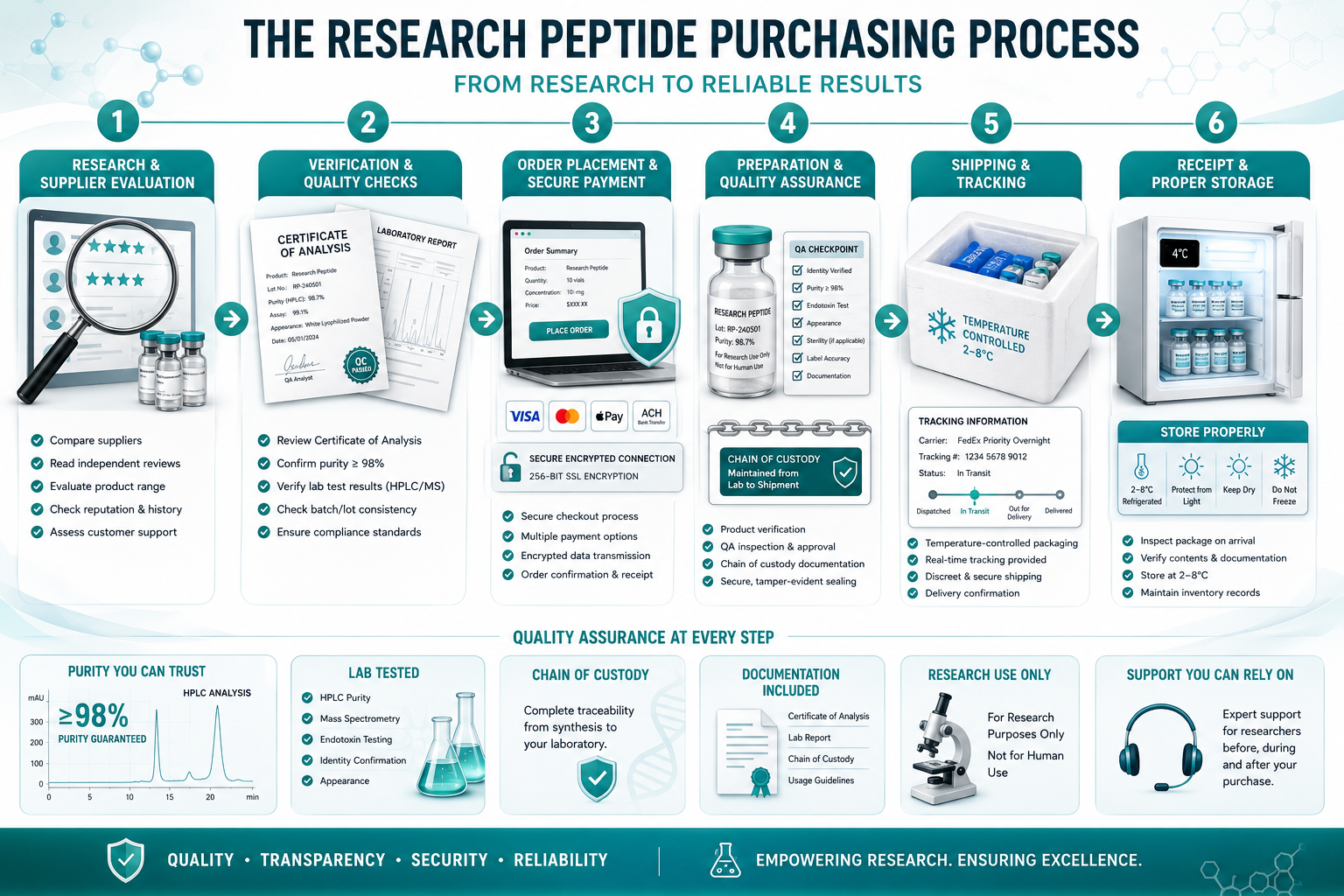
A systematic verification process protects research integrity and budget allocation. Follow these steps when evaluating where to buy research peptides:
Step 1: Business Verification
- Confirm business registration and legal entity status
- Verify physical address and contact information
- Check business tenure and operational history
- Review any regulatory actions or warnings
Step 2: Quality Documentation Review
- Request and examine recent Certificates of Analysis
- Verify third-party laboratory credentials
- Compare testing methods against industry standards
- Confirm batch-specific documentation availability
Step 3: Customer Feedback Analysis
- Search for independent reviews on research forums
- Contact other researchers about their experiences
- Check scientific publication acknowledgments
- Review complaint patterns or quality issues
Step 4: Technical Support Assessment
- Evaluate responsiveness to technical inquiries
- Assess knowledge level of support staff
- Confirm availability of storage and handling guidance
- Verify return and quality guarantee policies
Pricing Considerations and Budget Planning
Research peptide pricing varies based on sequence complexity, purity level, quantity, and supplier positioning. Understanding pricing structures helps researchers make cost-effective decisions without compromising quality.
Typical pricing factors:
| Factor | Impact on Price |
|---|---|
| Peptide length | Longer sequences cost significantly more |
| Purity level | 98%+ purity commands premium pricing |
| Synthesis difficulty | Complex sequences increase costs |
| Order quantity | Bulk orders reduce per-unit costs |
| Custom synthesis | Significantly higher than catalog items |
| Shipping requirements | Temperature control adds costs |
Budget optimization strategies:
- Plan research needs in advance to leverage bulk pricing
- Consider peptide pooling with other research groups
- Evaluate total cost including shipping and storage
- Factor in potential waste from quality issues with cheaper suppliers
- Calculate cost-per-experiment rather than cost-per-gram
Storage, Handling, and Supplier Responsibilities
Quality preservation begins with the supplier. When evaluating where to buy research peptides, assess the supplier’s storage and shipping protocols.
Supplier Storage Standards
Reputable suppliers maintain:
- Temperature-controlled storage facilities (typically -20°C to -80°C)
- Humidity-controlled environments
- Light-protected storage
- Contamination prevention measures
- Inventory rotation systems
Shipping Requirements
Research peptides require specialized shipping to maintain integrity:
- Cold chain shipping with temperature monitoring
- Insulated packaging with sufficient coolant
- Expedited delivery to minimize temperature exposure
- Tracking systems for shipment monitoring
- Delivery confirmation to prevent extended exposure
Suppliers should provide clear guidance on immediate storage upon receipt and handling procedures for reconstitution and aliquoting.
Building Long-Term Supplier Relationships
Establishing relationships with reliable suppliers provides ongoing benefits beyond individual purchases:
- Priority access during supply shortages
- Preferential pricing for repeat customers
- Custom synthesis capabilities for specialized needs
- Technical consultation for experimental design
- Advance notice of new products or formulations
Researchers should maintain detailed records of supplier performance, including:
- Quality consistency across multiple orders
- Shipping reliability and product condition
- Customer service responsiveness
- Documentation accuracy
- Problem resolution effectiveness
Emerging Trends in Research Peptide Supply
The research peptide market continues evolving in 2026, with several trends affecting where to buy research peptides:
Increased transparency: Leading suppliers now provide blockchain-verified chain of custody documentation, ensuring complete traceability from synthesis to delivery.
Sustainability initiatives: Environmental considerations influence manufacturing processes, with suppliers adopting greener synthesis methods and sustainable packaging.
Advanced analytics: Suppliers increasingly offer enhanced characterization services beyond standard purity testing, including stability studies and formulation optimization.
Direct-to-researcher platforms: Digital marketplaces connecting researchers directly with synthesis facilities reduce intermediary costs while maintaining quality standards.
Conclusion
Determining where to buy research peptides requires careful evaluation of supplier quality standards, regulatory compliance, pricing structures, and operational reliability. The decision directly impacts research outcomes, budget efficiency, and scientific integrity.
Researchers should prioritize suppliers demonstrating consistent quality through third-party testing, transparent business practices, and comprehensive documentation. While premium suppliers command higher prices, the cost of compromised research from inferior peptides far exceeds any initial savings.
Actionable next steps:
- Create a supplier evaluation checklist incorporating the quality indicators discussed in this guide
- Request Certificates of Analysis from potential suppliers and verify third-party laboratory credentials
- Start with small orders to assess supplier reliability before committing to larger purchases
- Establish relationships with multiple qualified suppliers to ensure supply continuity
- Document supplier performance systematically to inform future purchasing decisions
- Stay informed about regulatory changes affecting research peptide procurement in your jurisdiction
By applying rigorous selection criteria and maintaining high standards for supplier qualification, researchers can secure reliable sources for research peptides that support valid, reproducible scientific investigations throughout 2026 and beyond.
SEO Meta Title: Where to Buy Research Peptides: 2026 Supplier Guide
Meta Description: Discover how to identify reliable research peptide suppliers in 2026. Learn quality indicators, verification processes, and regulatory considerations.
Tags: research peptides, peptide suppliers, laboratory research, research chemicals, peptide quality, scientific research, GMP compliance, peptide synthesis, research procurement, laboratory suppliers, peptide testing, research standards
Where to Buy Research Peptides: A Comprehensive Guide for Researchers in 2026
The global peptide therapeutics market reached $48.5 billion in 2025, yet researchers continue to struggle with a fundamental challenge: identifying reliable sources for high-quality research peptides. With countless vendors claiming pharmaceutical-grade products and the proliferation of unverified suppliers, knowing where to buy research peptides has become as critical as the research itself.
Research peptides serve as essential tools in scientific investigations spanning cellular biology, pharmacology, and therapeutic development. However, the quality of research outcomes depends entirely on the purity and authenticity of these compounds. A single contaminated or mislabeled peptide can invalidate months of work and waste significant research funding.
This guide provides researchers with evidence-based criteria for evaluating suppliers, understanding regulatory considerations, and making informed purchasing decisions in 2026.
Key Takeaways
- Legitimate research peptide suppliers provide third-party testing certificates showing purity levels of 98% or higher with detailed analytical data
- Regulatory compliance varies by jurisdiction, with research peptides classified differently from pharmaceutical drugs but still subject to quality standards
- Price alone is a poor indicator of quality; reputable suppliers balance competitive pricing with rigorous quality control processes
- Proper storage and handling requirements begin at the supplier level, with temperature-controlled shipping being a minimum standard
- Verification of supplier credentials, including business registration, laboratory certifications, and customer reviews, is essential before making purchases
Understanding Research Peptides and Their Applications
Research peptides are short chains of amino acids used exclusively for scientific investigation and laboratory research. These compounds play crucial roles in studying cellular mechanisms, protein interactions, receptor binding, and potential therapeutic pathways. Unlike pharmaceutical peptides approved for human use, research peptides are designated “for research purposes only” and are not intended for human consumption.
The distinction matters significantly when considering where to buy research peptides. Legitimate suppliers clearly label their products for research use and maintain strict quality standards comparable to pharmaceutical-grade compounds, even though the end application differs.
Common research applications include:
- Cellular signaling pathway studies
- Receptor binding affinity research
- Protein-protein interaction investigations
- Metabolic pathway analysis
- Tissue regeneration studies
- Neuropeptide function research
Critical Quality Indicators When Evaluating Suppliers
Quality assurance separates reputable research peptide suppliers from questionable vendors. Researchers should prioritize several non-negotiable quality indicators before making purchasing decisions.
Third-Party Testing and Certificates of Analysis
Every legitimate supplier provides Certificates of Analysis (CoA) from independent laboratories. These documents should include:
- High-Performance Liquid Chromatography (HPLC) results showing purity percentages
- Mass Spectrometry (MS) data confirming molecular weight and identity
- Amino acid analysis verifying sequence accuracy
- Endotoxin testing results for biological safety
- Batch numbers linking certificates to specific products
Purity levels should consistently exceed 98% for most research applications. Suppliers who refuse to provide CoAs or offer only generic certificates should be avoided entirely.
Manufacturing Standards and Facilities
Reputable suppliers manufacture or source peptides from facilities following Good Manufacturing Practices (GMP). While research peptides don’t require the same regulatory approval as pharmaceuticals, quality-focused suppliers voluntarily adopt these standards.
Key facility indicators include:
- ISO certification (ISO 9001 or higher)
- Clean room manufacturing environments
- Documented quality control procedures
- Proper storage infrastructure with temperature monitoring
- Contamination prevention protocols
Where to Buy Research Peptides: Evaluating Supplier Categories
The research peptide market includes several supplier categories, each with distinct characteristics, advantages, and potential drawbacks.
Specialized Research Chemical Suppliers
These companies focus exclusively on providing research-grade compounds to academic institutions, pharmaceutical companies, and independent laboratories. They typically offer:
- Extensive peptide catalogs with hundreds of compounds
- Custom synthesis services for specialized sequences
- Comprehensive technical support and documentation
- Established relationships with research institutions
- Consistent quality across product lines
Advantages: Highest quality standards, reliable supply chains, extensive documentation
Considerations: Premium pricing, minimum order quantities, verification of research credentials
Contract Research Organizations (CROs)
CROs that manufacture peptides for pharmaceutical development often sell research-grade peptides as a secondary business line. These suppliers bring pharmaceutical-level expertise to the research market.
Advantages: Pharmaceutical-grade quality control, advanced synthesis capabilities, regulatory compliance expertise
Considerations: Higher costs, potential minimum orders, longer lead times
Online Research Chemical Vendors
The proliferation of online vendors has made research peptides more accessible, but quality varies dramatically. When considering where to buy research peptides online, researchers must exercise heightened scrutiny.
Red flags to avoid:
- Absence of third-party testing documentation
- Claims about human use or therapeutic benefits
- Extremely low pricing compared to market averages
- Poor website security or unprofessional presentation
- Lack of verifiable business registration
- No clear return or quality guarantee policies
Positive indicators:
- Transparent business information and contact details
- Comprehensive product documentation
- Secure payment processing
- Professional customer service
- Established online presence with verifiable reviews
Regulatory Considerations and Compliance
Understanding the regulatory landscape is essential when determining where to buy research peptides. Regulations vary significantly by jurisdiction and continue evolving in 2026.
United States Regulations
In the United States, research peptides fall under the purview of several agencies depending on their specific classification and intended use:
- The FDA does not regulate research peptides the same way as approved drugs, but suppliers must avoid making therapeutic claims
- The DEA monitors certain peptides with potential for misuse
- State regulations may impose additional requirements on suppliers and purchasers
Legitimate suppliers operating in the U.S. maintain clear policies about research-only use and require purchaser attestations confirming appropriate research applications.
International Considerations
Researchers purchasing from international suppliers should verify:
- Export/import compliance for controlled substances
- Customs documentation requirements
- Temperature-controlled international shipping capabilities
- Supplier compliance with origin country regulations
Verification Process: Due Diligence Before Purchasing
A systematic verification process protects research integrity and budget allocation. Follow these steps when evaluating where to buy research peptides:
Step 1: Business Verification
- Confirm business registration and legal entity status
- Verify physical address and contact information
- Check business tenure and operational history
- Review any regulatory actions or warnings
Step 2: Quality Documentation Review
- Request and examine recent Certificates of Analysis
- Verify third-party laboratory credentials
- Compare testing methods against industry standards
- Confirm batch-specific documentation availability
Step 3: Customer Feedback Analysis
- Search for independent reviews on research forums
- Contact other researchers about their experiences
- Check scientific publication acknowledgments
- Review complaint patterns or quality issues
Step 4: Technical Support Assessment
- Evaluate responsiveness to technical inquiries
- Assess knowledge level of support staff
- Confirm availability of storage and handling guidance
- Verify return and quality guarantee policies
Pricing Considerations and Budget Planning
Research peptide pricing varies based on sequence complexity, purity level, quantity, and supplier positioning. Understanding pricing structures helps researchers make cost-effective decisions without compromising quality.
Typical pricing factors:
| Factor | Impact on Price |
|---|---|
| Peptide length | Longer sequences cost significantly more |
| Purity level | 98%+ purity commands premium pricing |
| Synthesis difficulty | Complex sequences increase costs |
| Order quantity | Bulk orders reduce per-unit costs |
| Custom synthesis | Significantly higher than catalog items |
| Shipping requirements | Temperature control adds costs |
Budget optimization strategies:
- Plan research needs in advance to leverage bulk pricing
- Consider peptide pooling with other research groups
- Evaluate total cost including shipping and storage
- Factor in potential waste from quality issues with cheaper suppliers
- Calculate cost-per-experiment rather than cost-per-gram
Storage, Handling, and Supplier Responsibilities
Quality preservation begins with the supplier. When evaluating where to buy research peptides, assess the supplier’s storage and shipping protocols.
Supplier Storage Standards
Reputable suppliers maintain:
- Temperature-controlled storage facilities (typically -20°C to -80°C)
- Humidity-controlled environments
- Light-protected storage
- Contamination prevention measures
- Inventory rotation systems
Shipping Requirements
Research peptides require specialized shipping to maintain integrity:
- Cold chain shipping with temperature monitoring
- Insulated packaging with sufficient coolant
- Expedited delivery to minimize temperature exposure
- Tracking systems for shipment monitoring
- Delivery confirmation to prevent extended exposure
Suppliers should provide clear guidance on immediate storage upon receipt and handling procedures for reconstitution and aliquoting.
Building Long-Term Supplier Relationships
Establishing relationships with reliable suppliers provides ongoing benefits beyond individual purchases:
- Priority access during supply shortages
- Preferential pricing for repeat customers
- Custom synthesis capabilities for specialized needs
- Technical consultation for experimental design
- Advance notice of new products or formulations
Researchers should maintain detailed records of supplier performance, including:
- Quality consistency across multiple orders
- Shipping reliability and product condition
- Customer service responsiveness
- Documentation accuracy
- Problem resolution effectiveness
Emerging Trends in Research Peptide Supply
The research peptide market continues evolving in 2026, with several trends affecting where to buy research peptides:
Increased transparency: Leading suppliers now provide blockchain-verified chain of custody documentation, ensuring complete traceability from synthesis to delivery.
Sustainability initiatives: Environmental considerations influence manufacturing processes, with suppliers adopting greener synthesis methods and sustainable packaging.
Advanced analytics: Suppliers increasingly offer enhanced characterization services beyond standard purity testing, including stability studies and formulation optimization.
Direct-to-researcher platforms: Digital marketplaces connecting researchers directly with synthesis facilities reduce intermediary costs while maintaining quality standards.
Conclusion
Determining where to buy research peptides requires careful evaluation of supplier quality standards, regulatory compliance, pricing structures, and operational reliability. The decision directly impacts research outcomes, budget efficiency, and scientific integrity.
Researchers should prioritize suppliers demonstrating consistent quality through third-party testing, transparent business practices, and comprehensive documentation. While premium suppliers command higher prices, the cost of compromised research from inferior peptides far exceeds any initial savings.
Actionable next steps:
- Create a supplier evaluation checklist incorporating the quality indicators discussed in this guide
- Request Certificates of Analysis from potential suppliers and verify third-party laboratory credentials
- Start with small orders to assess supplier reliability before committing to larger purchases
- Establish relationships with multiple qualified suppliers to ensure supply continuity
- Document supplier performance systematically to inform future purchasing decisions
- Stay informed about regulatory changes affecting research peptide procurement in your jurisdiction
By applying rigorous selection criteria and maintaining high standards for supplier qualification, researchers can secure reliable sources for research peptides that support valid, reproducible scientific investigations throughout 2026 and beyond.
SEO Meta Title: Where to Buy Research Peptides: 2026 Supplier Guide
Meta Description: Discover how to identify reliable research peptide suppliers in 2026. Learn quality indicators, verification processes, and regulatory considerations.
Tags: research peptides, peptide suppliers, laboratory research, research chemicals, peptide quality, scientific research, GMP compliance, peptide synthesis, research procurement, laboratory suppliers, peptide testing, research standardsg!
